
languages languagesicone
site loader
site loader
August 25, 2026 The Mighty Pines Talk the Studio Risk, the Daily Grind of Independent Band and More [Interview]

The Mighty Pines Talk the Studio Risk, the Daily Grind of Independent Band and More [Interview]

The Mighty Pines, a St. Louis-based quartet known for their deft fusion of bluegrass, soul, and rock & roll, unveil their most accomplished work to date with their third studio album, ‘Good Luck, Nice To Meet You’. Drawing inspiration from Bruce Hornsby, Tom Petty, Counting Crows, and Hiatus Kaiyote, the band’s dual songwriters and signature three-part harmonies shape a collection defined by infectious rhythms, soaring melodic lines, and nuanced storytelling. The group’s stature within the American roots landscape is underscored by standout performances at Telluride Bluegrass Festival, a national television appearance on NBC’s The Voice, collaborations with Michael McDonald, and the continued growth of their annual Pines Fest, now a fixture in the Midwest roots calendar.

With ‘Good Luck, Nice To Meet You’, The Mighty Pines reinforce their standing as one of the most dynamic live acts on the American roots circuit. Read on for our exclusive interview exploring the creative process behind the album.

Hey, thanks so much for sitting down with us today – what’s been the absolute best part of your week so far, music aside? 

We’d have to say waking up in our own homes after being on the road for a little while in support of our brand new studio album

Which genres best describe your music?

Four words: Grass, Soul, Rock ‘n Roll. 

If someone wanted to understand the real vibe of the band beyond the music, what’s one story from your everyday life that says it all? 

There’s probably not just one story, just the fact that we value time being outdoors, exploring new music, and supporting our colleagues in the St. Louis music scene, cooking for others, and nurturing our relationships with friends and family. 

What’s the wildest creative risk you’ve ever taken in the studio that actually paid off in ways you never saw coming? 

Trusting in a producer to help mold your sound.  That process is quite an interesting landscape.  You get vulnerable with someone else handling your songs.  For Example, one of our latest songs, ‘Good Luck, Nice To Meet You,’ has a chorus that was more of a double time feel when we first wrote it. Kick on all four beats, accents on the upbeats, kind of a disco vibe.  Then our producer suggested that we lay it back into more of a half time feel.  It completely changed the vibe for the better and we all dug it on the spot. It grooved harder and that was such a pleasant surprise. 

How often do you hope to release new music? 

Releasing new music on a regular basis is key in this current musical landscape.  Something new every 6-12 months is a goal of ours whether it’s singles, an EP, or full length album.

What is the date of your next planned single/EP/Album release?

Well we just released a brand new studio album titled “Good Luck, Nice To Meet You” on July 31st, 2026.  We might toy around with a cover project here in the fall time though.

If you could change one thing about the modern music industry overnight, what would it be?

That record labels/streaming services stop siphoning money from the artists.  Pay artists fairly when it comes to streaming and sales royalties.

Do you see AI as a threat to musicians, a helpful collaborator, or something else? How do you plan to keep your music relevant as the industry changes rapidly because of these tools? By embracing AI, avoiding it, or taking a different approach?

In our eyes,  we don’t see AI as an ultimate threat to musicians because we believe people long for that human to human musical connection.  People would miss it too much if that aspect went away.   Sure, AI could be a tool to help musicians on the business side with  administrative tasks.  And when it comes to music underwriting or music scoring, that could be a threat to some musicians.  But when it comes to actual music being written and performed, we have the upper hand because well… we’re human. We will continue to write our own music organically and that will keep us relevant.  Side note; It would help if all streaming services banned AI generated music on their platforms. 

What is the single biggest challenge you currently face as an independent band?

Doing all of the business/administrative work yourself.  General promotion of all shows, answering emails, show advancing, tour prep, managing merchandise, posting on all your social media profiles, creating content, releasing music, the list goes on and it really doesn’t stop.  And on top of all of that there always needs to be time for the music. Writing, performing, rehearsing.  Rinse and repeat.

What core themes were you hoping listeners would connect with in your latest track?

We don’t really care what theme a listener picks when listening to our music.  We know we dig our latest songs and think they’re some of the best work we’ve put out there. If people can resonate and feel good with what they hear, that’s a nice cherry on top.

If you could revisit one decision from your artistic journey and do it differently, what would it be? 

Try to hire a producer early on in your career to get used to the fact that outside influence can work in a positive manner.

What’s one unexpected influence, maybe from outside music, that keeps showing up in your work? 

I think it’s just all the different kinds of music that influence us to find a way to show up.  We have experience from a lot of different backgrounds and since we play bluegrass from time to time, we can also play some really soulful stuff. That kinda keeps our audience on their toes a bit.

What’s one fun or ridiculous moment from the studio or road since this release that still makes you smile?

The fact that we were able to get legendary producer Steve Berlin (Los Lobos) to work with us for a second time and help us make some of the best music we’ve put out to date.  It’s really cool to think that we were able to work with someone of that caliber not once but twice in the studio.

Stream ‘Good Luck, Nice To Meet You’
Follow The Mighty Pines:

SpotifyFacebookInstagram

May 28, 2026 The Unshakable Faith Behind That Feelin’: An Interview with Rising Americana Star Megan Lacy

The Unshakable Faith Behind That Feelin’: An Interview with Rising Americana Star Megan Lacy

Megan Lacy is a Texas-based singer-songwriter whose music blends sultry country, alt-country grit, and expansive Americana textures. After years of honing her craft in Austin’s East Side music scene through songwriter rounds, honky tonks, and intimate club performances, Megan has emerged as a compelling new voice known for her emotionally candid storytelling and magnetic vocal delivery. Influenced by artists such as Gillian Welch, Dave Rawlings, Neko Case, and Ryan Adams, she channels raw vulnerability and lyrical depth into her work.

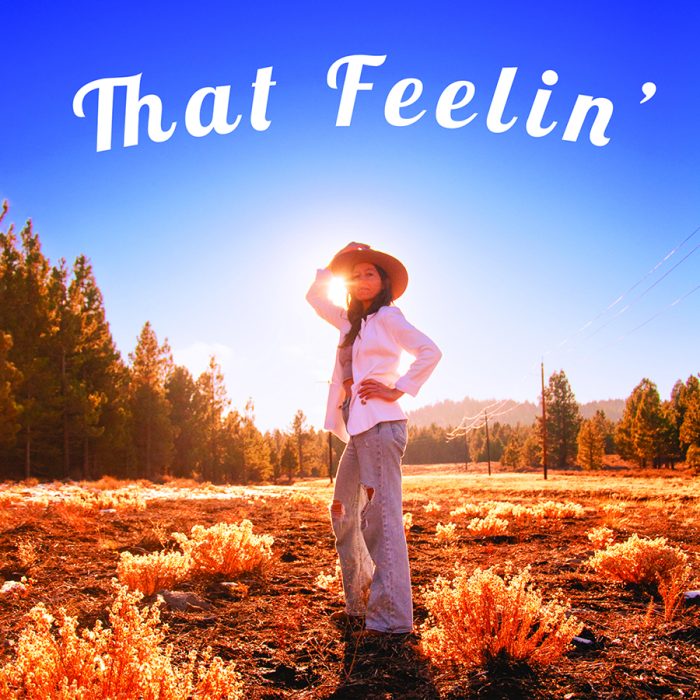
Her debut album, That Feelin’, released on 7 May 2026, marks her most fully realised project to date. Recorded live at King Electric Recording with producer Justin Douglas, the 12-track record explores themes of love, loss, identity, and self-reclamation through a rich fusion of country swing, blues-rock, cosmic Americana, and cowpunk energy. Featuring standout tracks including ‘How That Feels’ and ‘Lost In The Feeling,’ the album showcases Megan’s ability to balance tenderness, resilience, and emotional honesty, establishing her as a rising artist to watch in the Americana and country landscape.

Listen to That Feelin’ while you read the interview below:

Tell us more about the album: What does That Feelin’ represent for you
personally and creatively?

This record was such a beautiful moment in time for me — it represents a transformation in perspective, and it’s something I get to look back on as a real opening in my creative life. It really allowed me to step into a new chapter, one where I trust the process, ask for what I want, and allow whatever comes.

Was there a particular mindset or period in your life that shaped the album?

I had experienced a profound spiritual awakening, and most of the songs on the record were written after that. When I was preparing to make the record, I knew the process itself would transform me. I didn’t know how, or what the conditions might be, but every step I took in making the album was accompanied by an unshakable trust in the process, in my collaborators, and in myself. I think they call that faith.

How would you describe the sound of the record to a new listener or fan?

There’s definitely a range in genre on this record, so to cover all the bases, I usually say alt-country / cosmic Americana — but it really lives in atmosphere and storytelling first.

What was the experience of recording the album live like?

Recording live was such an integral part of learning to trust the process. Hearing everything come together in the moment, and listening in real time for the take everybody knows is the one was really magical.

How has living and performing in Austin influenced you as an artist?

I love experiencing music in real life, so being in Austin and watching artists perform in these cosmic spots all over town really, really moves me. It’s the same when I perform –people show up to listen. It’s a part of the culture in Austin. I also think it has a lot to do with the sound of the room, so shout out to all the audio engineers who produce the live music experience –it would not be the same if the sound of the room didn’t pull you in.

You’ve cited artists like Gillian Welch and Neko Case as inspirations. What
draws you to artists with strong storytelling styles?

I’ve always appreciated artists who recognize themselves as the whole of humanity. It’s a deeply forgiving perspective. It creates the conditions for storytelling that feels undeniable and lived in.

Why did you choose ‘How That Feels’ to open the album?

I love that song as an opener because it holds so much space. It begins the listener’s relationship to the record by asking what they’re able to see. It’s like a little invitation.

What inspires you to write?

Being in the room with that creative force is the most uncorrupted experience I’ve come across with any consistency. It’s like becoming a channel for something ultimate. Whether or not that comes across in the writing is a completely different story –the relationship is what I’m after, and the byproduct is a bunch of songs, Haha.

What do you hope listeners connect with most when they hear this record?

I think when someone connects with music, it’s an inside job, and probably none of my business beyond that. Whatever they take from it is theirs to keep, and I’m happy for the connection wherever it lies.

What can fans expect next from you?

I just cut a new record last week! It’s called Shotgun Heart, and it’s songs for the anti-hero in us. It’s kind of the story of living in the aftermath. Enlightenment doesn’t save people from their humanity. Ultimately, it’s on us to live differently if we want to experience something new. I know how much easier that is to say than to practice, so… one degree at a time.

Follow Megan Lacy on Instagram.

November 5, 2025 Barber for the Queen Talk Real-Life Heartbreak Behind ‘Starstruck’, Indie Hustle Fears & More [Interview]

Barber for the Queen Talk Real-Life Heartbreak Behind ‘Starstruck’, Indie Hustle Fears & More [Interview]

Barber for the Queen burst back onto the scene this fall with a blistering new single that fuses their signature disco grooves with jagged alternative rock, proving once again why this Montreal-bred quintet—sparked to life in 2017 by the irrepressible frontman Jean-Raphaël Côté and  Zachary Beaudoin on guitar, then rounded out by the razor-sharp talents of Simon Boisseau, Matis De Koninck, and Mathis Beauséjour—has spent years owning sweaty clubs and festival stages across the city, turning casual listeners into hip-shaking converts with their ecstatic blend of psych-rock psychedelia, indie swagger, and unrelenting funky rhythms. After honing a catalog that already hooks everyone from casual ravers to die-hard sonic explorers, they’ve dropped this latest record just in time to fuel a hunger for live chaos, where Côté‘s wild-eyed extravagance and the band’s frantic, pulse-pounding rhythm section guarantee no one’s left standing still!

Now, dive into our sit-down with the crew as they spill on their latest single ‘I GOT ALL MY TIME’, what shaped them, and what’s next.

Let’s rewind to 2017—Jean-Raphaël, Zachary, what was that first jam session like that sparked Barber for the Queen, and how did Simon, Matis, and Mathis crash the party to make it a quintet?

Jean, Zach and Simon all come from the Montreal south-shore and when we were teenagers, finding other musicians with the same interests wasn’t that easy, so Zach and Jean contacted each other through a common friend and jammed on Pink Floyd, 13th Floor Elevators and The Doors tunes and hit it off. They later formed a trio with a drummer and Zach met Simon while they were attending the same high school, then invited him to join the band. Through those couple of years there were a bit of lineup changes but the core of the band remained. When we went to college, Zach met both Matis and Mathis while studying Jazz music and the three found they had similar music tastes and inspirations. Matis joined as the new bass player and Mathis then also joined as drummer helping the band’s aspirations to play funkier, tighter compositions.

Montreal’s scene is a beast—how has grinding it out in spots like Foufounes Électriques or Petit Campus shaped the frantic energy you bring to every show?

The couple first times we played Petit Campus were kind of last-minute surprises, as we were often asked to play first parts of touring bands. Obviously we wanted to get a new crowd’s attention by being overly present and energetic, which then made us see what kind of energy we were able to attain in these kinds of situations. I think realizing that the listener’s response was to be as crazy as we were fed us with more energy and made us want to implement that to every performance we play. It’s then become a signature for us to each have our kind of unhinged side and create our own character we want to be when going out on stage.

Your sound pulls from disco’s shine to psych-rock’s haze—what’s one underrated 70s or 80s track that’s been on repeat in the van lately, and why does it hit different now?

Although we have a somewhat consistent sound with inspirations bleeding through our music, we all have different genres of music that specific members love more than others. From Indie, Folk, Pop, Funk, Rock, Jazz, Punk and Metal, we all have our fetish bands, but a song that might stand out as our common go to on the road would probably be ‘Passion Flower’ (Translation from the Japanese title) on the Pacific album by Shigeru Suzuki, Haruomi Hosono and Tatsuro Yamashita. Another one that’s been heavily in rotation lately would be ‘You’re a Prisoner’ by Death. The Pacific album has been a classic for us since we started listening to Disco, Funk and in this instance City Pop. We’re always suckers for great melodies and musicianship that serve songs to their fullest potential. As of lately, some of us have been into more extreme genres of music from Hyperpop to Punk or Metal, and Death has been a band that joined melody and great songwriting to a heavier sound, which we love.

With BABA dropping in 2023 as your big leap, what surprised you most about how fans latched onto tracks like “DKWIDW” with Goodbye Karelle?

With ‘DKWIDW’, we had this sound that was kind of a bridge to what we wanted to do with our next album. By this point, we were gonna release a whole album of almost only pure funky disco songs and as a band that always had an eclectic sound; starting as and indie rock band, making a lo-fi synth pop EP and then making BABA, we always love to fuck with expectations. Releasing ‘DKWIDW’ as a single back then seemed to be more challenging and foreseeing of what was coming next in our catalog. The more modern-sounding production of that song might be a reason why people would gravitate towards it. Maybe the feature from Goodbye Karelle was also a new texture the band hadn’t meddled with at this point and made people interested in what we were doing. As these things go, you can never really point out what makes people love a song and maybe finding out wouldn’t make us understand that much more.

That viral street performance in June—pure chaos or calculated madness? Walk us through the moment the crowd just… lost it.

Playing that show was a pretty fun moment for us. We always love playing to totally new people and it was a perfect occasion for that as it was a free open show in Downtown Montreal. We started playing to a very little audience and people would walk by, but by the middle of the show, a crowd started to form and people started dancing with other strangers which undeniably made us want to go a little more crazy. We extended some jams so that Simon and Jean could go dance with people in front of the stage, we pulled out some of our older psychedelic freak outs from the early days and played newer songs to the audience. It was also a great moment to share music with some people from our city who don’t have the chance to go see more pricey performances. Overall it was a great time for us and the people who gave all their energy to dance and participate in the show.

‘Starstruck’ captures that dizzy nightlife spiral so vividly—Jean-Raphaël, was there a real honey who walked into a room and nearly broke you down, or is it all fever-dream fiction?

Yes there was. At the time, I was in love with someone who made me feel kind of starstruck. Writing that song and getting it all out on paper made me realize what I was really feeling and what kind of relationship I was living in. It’s a subject that inspired me throughout the whole new album and a lot of the songs I wrote have a tendency to touch on that subject. Usually I think that all our songs, even if the topic becomes romanticized, stem from a very real situation we’re living in and we process it the way we know; by writing songs.

Blending alternative rock into your funky rhythms for this fall’s album feels like a bold pivot—what sparked that evolution, and how did the band hash out keeping the dance floor sacred amid the psych twists?

As mentioned earlier, we always love to go against expectations and being bold musically has always been kind of our mantra. There’s always been an urge to almost start from scratch when starting on a new album or project. We rethink every way we compose or change every source that inspires us. Every new album is a journey through new sounds as we search for new musical landscapes and this time, we ended up going back to our childhoods. We all grew up being around ten years old when pop stars like The Black Eyed Peas, Lady Gaga or LMFAO were at their peak. Those were big influences on us throughout all our years of learning and making music, whether we liked it or not at the time. The plan on our new album was to embrace the music we grew up on and see how it fitted our own universe and previous influences for the project. It ended up being something completely different then what inspired us and when you don’t know what your music sounds like it’s easier to just call it Alt Rock even though we clearly don’t sound like Pearl Jam! Of course we still keep the dance floor as a special place in our hearts and the psychedelia has always been part of our sound, they’re both still part of how we make the band sound.

After years owning the Montreal underground, eyeing horizons like The New Colossus in NYC— what’s the one fear that’s kept you up at night about breaking out bigger?

No fear really, just a lack of openings. We’re still independent in every single aspect of the band; we book our shows, we record and produce our own music but we’re always open to change our ways. We’re still looking to broaden our reach but sometimes we lack a bit of help; juggling between booking our own gigs, recording on our dime, releasing and sharing our work with the resources on hand. We try our best at seeing opportunities that will bring us further and in that way we slowly grow our project at the pace that’s possible for the time being.

‘I Got All My Time’ lands like a reflective gut-punch amid the frenzy—how does time feel different for you guys now, post-BABA and with this new record charging ahead?

‘I Got All My Time’
was a song that originally had a more spacey, softer sound originally being written by Jean on a piano. When Jean brought it to Zach, they worked on a more focused, heavier type of song. The times were different as opposed to the BABA sessions which were more oriented on having songs in the vein of bands like Zapp or Lakeside. IGAMT was more of a mashup of listening to Katy Perry, 100gecs and Anthrax. Quite opposites! This kind of spirit was brought to every session we did on that album as a way of making something completely new. With the album release we feel something completely different than what we felt releasing BABA, in a good way. We keep elements of these sessions close. We still love that people can dance to our music and we still love the elements of a good groove.

If you could teleport the whole crew back to one wild gig from your early homemade EP days—say, l’Escogriffe or CJLO—what’s the ridiculous story you’d relive over beers right now?

One our first gigs was a big party at a barn on a farm owned by one of our old friend’s parents. It was a big open field and everyone brought their tents to sleep there after the show. We brought over all of our gear and met another band we became friends with and also played a lot of our first gigs in Montreal clubs. It was such a beautiful evening and I think going back to the early days, it would be a show and party we would relive any day. There’s also a less flattering moment when we did a show in Toronto where the sound man didn’t get our technical rider. When we came in, he saw our gear and told us we couldn’t play the show! Our setup was too complicated and he didn’t want to bother with us. He was so mad he stormed out of the venue telling us if we wanted to play, we’d have to set up all the cables feeding the mixing console; which is what we did. He came back smelling like weed and seemed a bit more relaxed. He finally let us play and as always we had a great time performing our set.

Stream ‘I Got All My Time’:

Follow Barber For The Queen:

SpotifyFacebookInstagram 

September 10, 2025 Jairic Talks High-Impact Performances at Elite Venues, Blending Film Scores into Hip-Hop Production & More [Interview]

Jairic Talks High-Impact Performances at Elite Venues, Blending Film Scores into Hip-Hop Production & More [Interview]

(Jairic / Image Credit: Lukas Merka)

From the gritty streets of Detroit to the sun-soaked vibes of Cannes, Jairic has carved out a fierce spot in hip-hop as a self-made musician, producer, and storyteller, blending raw lyrical punch with genre-bending production that draws from icons like Nas and Wu-Tang Clan, alongside Detroit underground edges, classic funk, 60s rock, and film scores. With nearly 2 million streams across platforms from his fully self-written, self-produced, and self-performed tracks—paired with visuals that mix luxury and grit—he’s a rising star at the crossroads of music, film, and fashion, having delivered standout performances at elite spots like Château Les Alouettes in Cannes, Villa Balbiano on Lake Como, and the Paris premiere of the short film Azur, while his work spans France, Italy, Prague, and the U.S.

His latest drop, ‘Don’t Let Me Put A Track On You’, hit on September 5, 2025, via Rich Air Music, premiering on CLASH Magazine and earning props from EARMILK, packing quick-witted bars, chaotic sound design, a Caribbean pulse, and a bridge with warm female vocals that echo his unfiltered energy.

We sat down with Jairic to dive deeper into his journey, influences, and this bold new track.

What’s it like growing up in a musical family in Detroit, and how did that shape your early days in hip-hop?

I’m incredibly grateful I had music around me from such a young age. In Detroit, rhythm was everywhere — every get-together had live music, and I grew up playing drums and piano. That foundation shaped everything I do in hip-hop.

How did you transition from producing beats for local Detroit artists to creating your own independent sound?

I loved producing for others, but I love writing too much to stay quiet. It’s therapeutic and engaging — I had to find my own voice.

Can you talk about the influences from Nas, Wu-Tang Clan, and classic funk that show up in your music?

Part of me is always chasing that standard — a beat as timeless as ‘C.R.E.A.M.’ or lyrics as poetic and hard-hitting as Nas. Classic funk adds the groove that ties it all together.

What’s been the biggest adjustment living and working in Cannes after coming from Detroit?

The toughest adjustment has been being away from family. I was performing and working on a project in the South of France, and ended up missing part of my daughter’s soccer season — that was hard.

How do you blend elements from film scores and 60s rock into your hip-hop production style?

When I produce, I see it like a film scene — every track feels like part of a soundtrack. That’s where the cinematic elements slip into the hip-hop foundation.

Tell us about performing at places like Château Les Alouettes and the Azur premiere—what stands out from those experiences?

I’ve been fortunate to collaborate with incredible people — but at the end of the day, it’s the relationships, the audience connection, and the places themselves that stand out most.

What inspired the lyrics in ‘Don’t Let Me Put A Track On You’, especially that “don’t run up on me” vibe?

Someone in my family was going through a really tough time — they got attacked for doing the right thing, and I had their back. As it started to spill onto me, I thought, ‘Oh no, you don’t want any of this.’ That energy sparked the track, and from there it took on a life of its own.

How did writing this track in the south of France bring in that Caribbean pulse and contrast between smooth and chaotic elements?

I was staring out at the Mediterranean, layering these wild percussion. It felt peaceful and soothing, but underneath it was a fight song — I was missing my family. That ‘manic, full of nonsense and grammatical’ section is where it really explodes. The bridge had been written for another track, but against that ocean sunset, it finally clicked and came together.

Can you walk us through the sound design choices in ‘Don’t Let Me Put A Track On You’, like the stirring intro and the bridge with female vocals?

The intro is actually a king cobra — a subtle nod to danger. I love layering percussion; sometimes I overdo it, but that’s where the beat takes me. The bassline has a reggae rhythm that locks in with the drums, then halfway through the verse it explodes into chaos — my favorite part. For the bridge, I originally sang it myself, but I wanted a female voice to bring contrast. Her harmonies and background vocals really added to the tension and build of the track.

If you could collaborate with anyone from your influences on a future track, who would it be and why?

Nas would be dope. I saw his Illmatic anniversary show in Germany with my son last year — legendary and effortless.

Stream ‘Don’t Let Me Put A Track On You’:

Follow Jairic:

WebsiteInstagramSoundcloudYoutubeSpotify