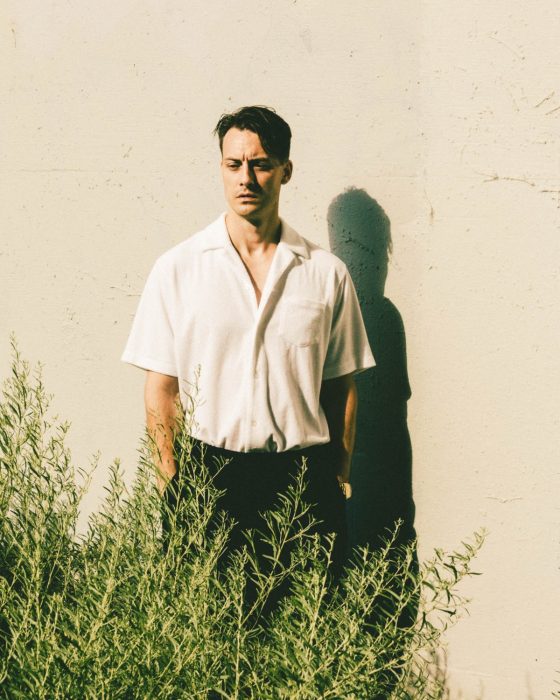
AFROTRAX, in partnership with PLAYY. Music, is proud to announce that international hip-hop superstar French Montana will perform two exclusive South African headline shows this December, bringing one of the most celebrated live performances in global hip-hop to local audiences.
The highly anticipated event series kicks off at The Ostrich Farm in Cape Town on Friday, 4 December 2026, running from 2:00 PM to 12:00 AM with support acts CASSPER NYOVEST, NASTY C, YOUNGSTACPT, 25K, JAIRIC (US), RARRI, KANE (DJ), BASSIK.
It then heads to The Canvas in Johannesburg on Saturday, 5 December 2026, where the event will take place from 1:00 PM to 11:00 PM with support acts CASSPER NYOVEST, KABZA DE SMALL, BLXCKIE, JAIRIC (US), LUCASRAPS, RARRI, K.KEED, TEDDY TUMI.
French Montana has become one of the most recognizable names in international music, amassing billions of streams worldwide through hits including “Unforgettable,” “No Stylist,”“Pop That,” “Ain’t Worried About Nothin‘,” and numerous collaborations with artists such as Drake, The Weeknd, Post Malone, Cardi B, Swae Lee and Chris Brown.
The AFROTRAX series has been created to celebrate the intersection of African culture, music, fashion and global entertainment, delivering world-class experiences that connect international artists with Africa’s vibrant creative communities. Beyond the headline performance, attendees can expect a full-scale festival experience featuring leading local artists, DJs, food vendors, lifestyle activations, premium hospitality experiences and immersive production.
“AFROTRAX represents a new chapter in African live entertainment. Our vision is to build a platform that celebrates African culture while connecting audiences with some of the most influential artists in the world. Launching the brand with French Montana is a significant milestone for us and the beginning of something much bigger.”
The Johannesburg event at The Canvas will deliver a high-energy urban festival atmosphere, while the Cape Town edition at The Ostrich will offer a unique outdoor summer experience set against one of the country’s most iconic event locations.
Additional artists, support acts, VIP experiences and hospitality packages will be announced in the coming weeks.
EVENT DETAILS
AFROTRAX CAPE TOWN
Date: Friday, 4th December 2026 Venue: The Ostrich, Cape Town Time: 2:00 PM – 12:00 AM Headliner: French Montana
AFROTRAX JOHANNESBURG
Date: Saturday, 5th December 2026 Venue: The Canvas, Johannesburg Time: 2:00 PM – 11:00 PM Headliner: French Montana
TICKETS
Tickets and VIP packages will be available exclusively through PLAYY.
PLAYY. Music is a global music and entertainment platform empowering artists through music distribution, live events, ticketing, fan engagement, commerce and creator-focused technology. Through its growing ecosystem, PLAYY. connects artists and audiences across digital and physical experiences worldwide.
The Faster AI Evolves, the More Valuable Human-Created Music Becomes
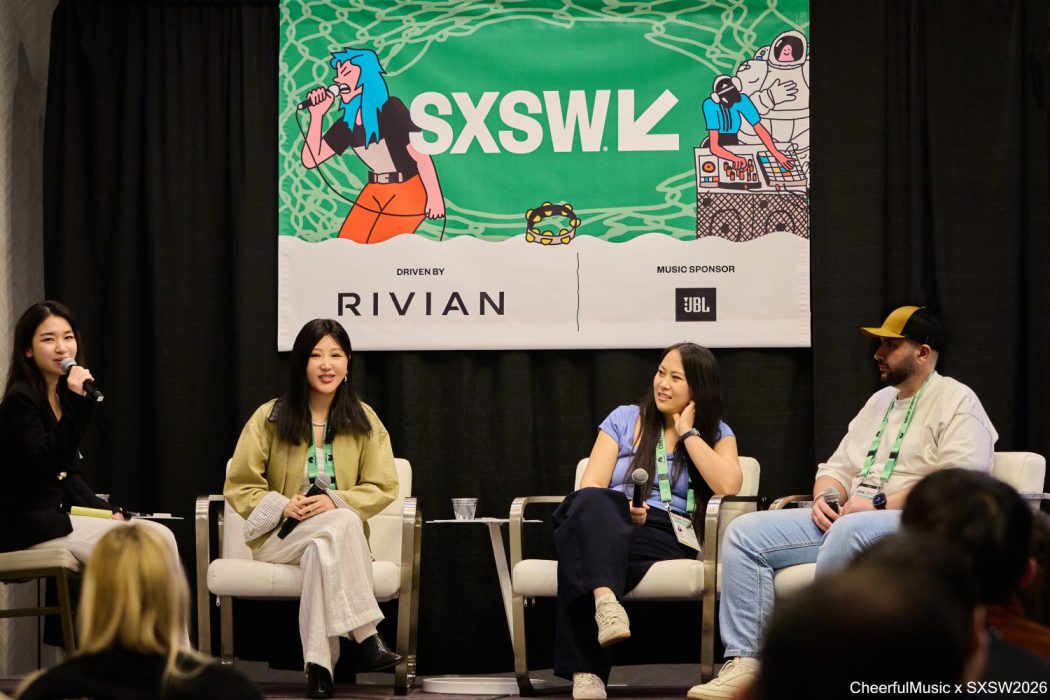
Acclaimed record label Cheerful Music, recently participated in a key panel discussion at renowned festival and conference SXSW, in Austin, Texas. The label, which was founded by industry thought leader and professional singer-songwriter – turned music entrepreneur Snow. J, known for her extraordinary vision in bridging the Chinese market with the West, engaged in the East x West: Cross Cultural AI Trends In Music Productionpaneldiscussion on 16 March. The panel received notable support from revered tastemaker publication Rolling Stone UK, which highlighted their participation in the SXSW discussion.
The panel drew strong interest from international music professionals eager to better understand the Chinese music market in the age of artificial intelligence. As the global music industry is propelled forward by the rapid iteration of AI technologies, China—one of the world’s most dynamic markets for AI application—is undergoing profound transformation. How are these changes reshaping music creation, distribution, and value? As AI virtual artists begin performing R&B from behind digital screens, a fundamental question emerges: where do human musicians stand in this new landscape? When music production becomes infinitely scalable, the discussion shifts from efficiency to meaning—prompting the industry to reconsider what truly remains scarce in the future of music.
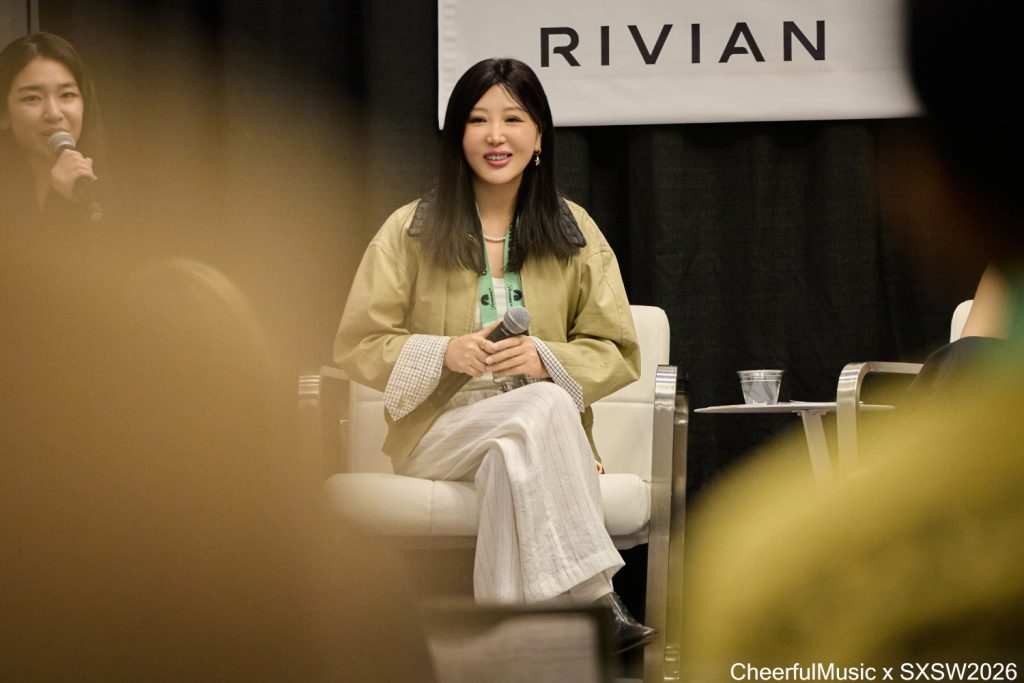
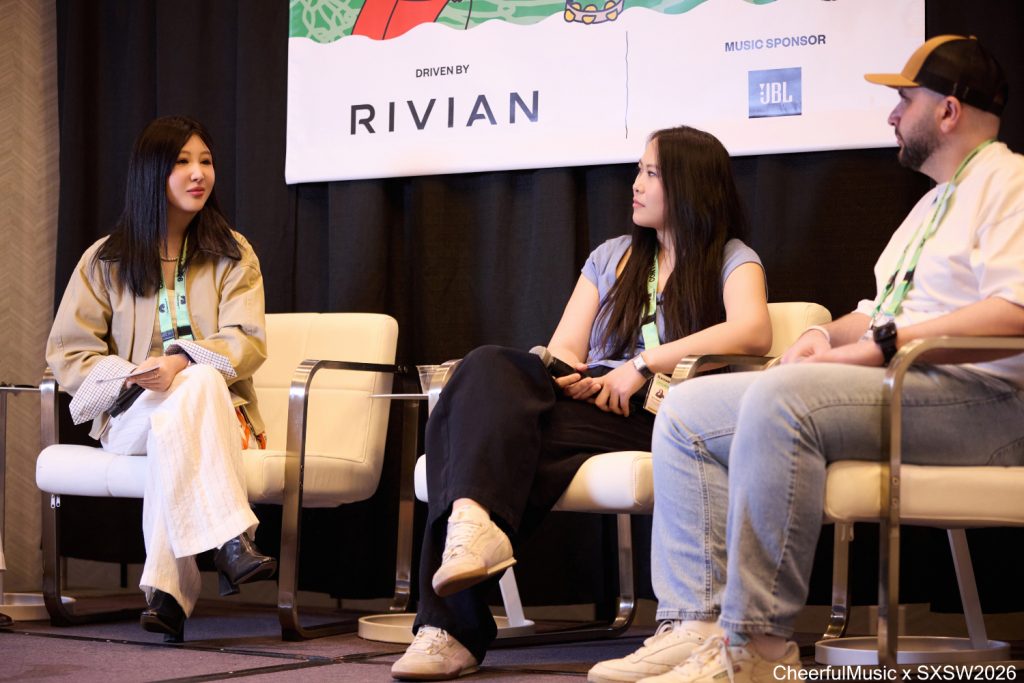
At this panel, Vice President of Copyrights at NetEase Music, Vivian Wei, Cheerful Music representative Snow J (蒋雪儿), and international electronic music artist MKJ came together to explore cross-cultural music creation in the AI era and discuss the future development of the global music industry.
Image credit: Dongfang Duan
The Current Landscape: A Library of Millions of AI-Generated Tracks – and the Disappearance of Breakout Hits
The panel opened with a discussion about the current state of China’s AI music market. Vivian Wei, Vice President of Copyrights at NetEase Music shared more on how AI has become an unstoppable force in the Chinese music industry. In her view, AI has dramatically lowered the barriers to music creation, leading to a surge in content uploads across platforms. However, despite the growing presence of innovative AI-driven works and a small number of tracks showing strong performance, AI music remains in an early stage of development. While overall production volume continues to rise rapidly, the head effect is still limited, and the proportion of AI-generated breakout hits remains relatively low. This gap between scale and impact underscores the ongoing challenge of translating technological efficiency into lasting audience resonance.
Snow. J shared Cheerful Music’s strategic response to the rapidly evolving AI landscape. She mentioned that despite the massive volume of songs uploaded daily, the label has maintained a clear bottom line: it does not produce purely one-click, fully AI-generated music. Instead, Cheerful Music currently leverages AI technologies for AI-assisted reinterpretations of popular tracks, while also developing its own virtual artist. The label remains firmly focused on its strengths in Chinese traditional music, emphasizing cultural depth and artistic identity. Electronic artist MKJ shared that AI will not replace artists, and mentioned that creators with distinctive styles and consistently high-quality output will always stand out amid an overwhelming volume of content. He emphasized that the more urgent question today is how to find a sustainable balance between human creativity and AI – using AI efficiently as a tool without undermining the income and value of human artists.
Consumption and Listening Habits: Have Audiences’ Ears Changed?
The panel then discussed whether or not AI has shifted audiences’ listening behaviour. Vivian Wei observed that, over the past decade, Chinese users’ musical preferences have remained remarkably stable. She noted that mainstream hits in China have consistently been Mandopop and R&B, particularly heartbreak ballads, while genres like Afrobeat have historically attracted only niche audiences. She suggested that overseas artists looking to enter the Chinese market should prioritise these mainstream styles. Vivian Wei further explained that, in today’s social media–driven era, artists cannot rely solely on production. Beyond creating music, they must actively manage their music platform accounts and social media profiles to build a fanbase. While AI can simplify production, it cannot by itself make an artist stand out.
Snow. J then shared her experience of a successful cross-genre collaboration with MKJ. She mentioned that the track, which merged Afrobeats with traditional Chinese elements, performed strongly on streaming platforms, which provided a unique blueprint for artists wanting to enter the Chinese market. When it comes to promotion however, Snow. J pointed out that based on the label’s experience, AI-generated tracks rarely become breakout hits and often face copyright disputes, making commercialisation more challenging.
Copyright Boundaries: Who Should Bear the Costs of “One-Click” AI Music?
The panel then shifted to one of the most pressing issues related to AI today: AI music royalties and regulatory frameworks. On this topic, Vivian Wei was candid. Currently, NetEaseMusic imposes no restrictions on AI creators, and they are able to receive royalty payments through the platform. However, she emphasized that any form of copyright infringement must be strictly addressed. Vivian Wei noted that AI-related royalty allocation is an ongoing discussion, and she personally believes that distribution rules should reflect the proportion of human contribution within a track. She further stressed that the current proliferation of AI-generated music is already influencing the broader industry ecosystem, and moving forward, it is essential to continue developing solutions that create a fair and transparent environment for all stakeholders, in collaboration with partners across the industry. Snow. J noted that on some Chinese streaming platforms, AI-generated music is already eligible for royalty settlements. MKJ expressed caution, saying that although AI is an innovative and powerful tool he warned that it could make producers lazy or over dependent. He also explained that the quality of AI-generated music remains difficult to compare with music created by humans, emphasizing that the use of AI tools requires more standardized oversight and regulation to ensure fairness and maintain artistic integrity.
Future Outlook: Human-Created Music Will Become an Even More Precious Asset
Looking toward the future of the music industry, Vivian Wei believes that AI music will become an important creative tool and help meet certain audience demands, but it will not dominate the entire market. She noted that the most expressive form of music remains live performances by artists, where genuine emotional connection occurs – something AI cannot replicate. Vivian Wei advised artists to stay true to their strengths and focus on building their personal brand, cautioning against losing themselves or their original artistic vision in the pursuit of AI-generated trends. Snow. J then shared a highly valuable observation saying: “The faster AI develops, the more valuable human-created music becomes.” She emphasized that Cheerful Music will continue to focus on original music and maintain traditional instrument-based creation and international songwriting camps, while adding AI-related modules to existing business operations. Snow. J also noted that in an environment saturated with AI-generated music, effective marketing and promotion are even more critical.
Closing Remarks: Upholding Originality to Keep Music Warm
The discussion closed on an enlightening note: For Cheerful Music, AI has never been an “invader” to resist or avoid; instead, it is a lever that helps us bring the expressions in our hearts to a wider world.
Looking ahead, Cheerful Music will continue to hold every original creation with respect and care. With the powerful support of technology, the label leverages AI to enhance production efficiency and explore new sensory possibilities for virtual artists, but their core driving force will always be human creativity. As Snow. J brilliantly put it: “The faster AI develops, the more valuable human-created music becomes.”
“From viral hit maker to a featured Harvard Business School case study, Cheerful Music exemplifies how a new generation of Chinese music label is navigating the digital music era and globalizing through the lens of internet-native entrepreneurship” Bandwagon.asia
“Cheerful Music’s “hit logic” consists of three elements: keen market intuition, rapid execution, and flexible promotion mechanisms.” Yahoo! Finance
“Cheerful Music arrived at Amsterdam Dance Event 2025 with something beyond a label showcase. In a week where international heavyweights dominated lineups across the city, they stood out as the only Chinese music company hosting its own stage, stepping into one of the world’s biggest electronic moments with a mission bigger than a club night.” Notion Magazine
Barber for the Queen burst back onto the scene this fall with a blistering new single that fuses their signature disco grooves with jagged alternative rock, proving once again why this Montreal-bred quintet—sparked to life in 2017 by the irrepressible frontman Jean-Raphaël Côté and Zachary Beaudoin on guitar, then rounded out by the razor-sharp talents of Simon Boisseau, Matis De Koninck, and Mathis Beauséjour—has spent years owning sweaty clubs and festival stages across the city, turning casual listeners into hip-shaking converts with their ecstatic blend of psych-rock psychedelia, indie swagger, and unrelenting funky rhythms. After honing a catalog that already hooks everyone from casual ravers to die-hard sonic explorers, they’ve dropped this latest record just in time to fuel a hunger for live chaos, where Côté‘s wild-eyed extravagance and the band’s frantic, pulse-pounding rhythm section guarantee no one’s left standing still!
Now, dive into our sit-down with the crew as they spill on their latest single ‘I GOT ALL MY TIME’, what shaped them, and what’s next.
Let’s rewind to 2017—Jean-Raphaël, Zachary, what was that first jam session like that sparked Barber for the Queen, and how did Simon, Matis, and Mathis crash the party to make it a quintet? Jean, Zach and Simon all come from the Montreal south-shore and when we were teenagers, finding other musicians with the same interests wasn’t that easy, so Zach and Jean contacted each other through a common friend and jammed on Pink Floyd, 13th Floor Elevators and The Doors tunes and hit it off. They later formed a trio with a drummer and Zach met Simon while they were attending the same high school, then invited him to join the band. Through those couple of years there were a bit of lineup changes but the core of the band remained. When we went to college, Zach met both Matis and Mathis while studying Jazz music and the three found they had similar music tastes and inspirations. Matis joined as the new bass player and Mathis then also joined as drummer helping the band’s aspirations to play funkier, tighter compositions.
Montreal’s scene is a beast—how has grinding it out in spots like Foufounes Électriques or Petit Campus shaped the frantic energy you bring to every show?
The couple first times we played Petit Campus were kind of last-minute surprises, as we were often asked to play first parts of touring bands. Obviously we wanted to get a new crowd’s attention by being overly present and energetic, which then made us see what kind of energy we were able to attain in these kinds of situations. I think realizing that the listener’s response was to be as crazy as we were fed us with more energy and made us want to implement that to every performance we play. It’s then become a signature for us to each have our kind of unhinged side and create our own character we want to be when going out on stage.
Your sound pulls from disco’s shine to psych-rock’s haze—what’s one underrated 70s or 80s track that’s been on repeat in the van lately, and why does it hit different now?
Although we have a somewhat consistent sound with inspirations bleeding through our music, we all have different genres of music that specific members love more than others. From Indie, Folk, Pop, Funk, Rock, Jazz, Punk and Metal, we all have our fetish bands, but a song that might stand out as our common go to on the road would probably be ‘Passion Flower’ (Translation from the Japanese title) on the Pacific album by Shigeru Suzuki, Haruomi Hosono and Tatsuro Yamashita. Another one that’s been heavily in rotation lately would be ‘You’re a Prisoner’ by Death. The Pacific album has been a classic for us since we started listening to Disco, Funk and in this instance City Pop. We’re always suckers for great melodies and musicianship that serve songs to their fullest potential. As of lately, some of us have been into more extreme genres of music from Hyperpop to Punk or Metal, and Death has been a band that joined melody and great songwriting to a heavier sound, which we love.
With BABA dropping in 2023 as your big leap, what surprised you most about how fans latched onto tracks like “DKWIDW” with Goodbye Karelle?
With ‘DKWIDW’, we had this sound that was kind of a bridge to what we wanted to do with our next album. By this point, we were gonna release a whole album of almost only pure funky disco songs and as a band that always had an eclectic sound; starting as and indie rock band, making a lo-fi synth pop EP and then making BABA, we always love to fuck with expectations. Releasing ‘DKWIDW’ as a single back then seemed to be more challenging and foreseeing of what was coming next in our catalog. The more modern-sounding production of that song might be a reason why people would gravitate towards it. Maybe the feature from GoodbyeKarelle was also a new texture the band hadn’t meddled with at this point and made people interested in what we were doing. As these things go, you can never really point out what makes people love a song and maybe finding out wouldn’t make us understand that much more.
That viral street performance in June—pure chaos or calculated madness? Walk us through the moment the crowd just… lost it.
Playing that show was a pretty fun moment for us. We always love playing to totally new people and it was a perfect occasion for that as it was a free open show in Downtown Montreal. We started playing to a very little audience and people would walk by, but by the middle of the show, a crowd started to form and people started dancing with other strangers which undeniably made us want to go a little more crazy. We extended some jams so that Simon and Jean could go dance with people in front of the stage, we pulled out some of our older psychedelic freak outs from the early days and played newer songs to the audience. It was also a great moment to share music with some people from our city who don’t have the chance to go see more pricey performances. Overall it was a great time for us and the people who gave all their energy to dance and participate in the show.
‘Starstruck’ captures that dizzy nightlife spiral so vividly—Jean-Raphaël, was there a real honey who walked into a room and nearly broke you down, or is it all fever-dream fiction?
Yes there was. At the time, I was in love with someone who made me feel kind of starstruck. Writing that song and getting it all out on paper made me realize what I was really feeling and what kind of relationship I was living in. It’s a subject that inspired me throughout the whole new album and a lot of the songs I wrote have a tendency to touch on that subject. Usually I think that all our songs, even if the topic becomes romanticized, stem from a very real situation we’re living in and we process it the way we know; by writing songs.
Blending alternative rock into your funky rhythms for this fall’s album feels like a bold pivot—what sparked that evolution, and how did the band hash out keeping the dance floor sacred amid the psych twists?
As mentioned earlier, we always love to go against expectations and being bold musically has always been kind of our mantra. There’s always been an urge to almost start from scratch when starting on a new album or project. We rethink every way we compose or change every source that inspires us. Every new album is a journey through new sounds as we search for new musical landscapes and this time, we ended up going back to our childhoods. We all grew up being around ten years old when pop stars like The Black Eyed Peas, Lady Gaga or LMFAO were at their peak. Those were big influences on us throughout all our years of learning and making music, whether we liked it or not at the time. The plan on our new album was to embrace the music we grew up on and see how it fitted our own universe and previous influences for the project. It ended up being something completely different then what inspired us and when you don’t know what your music sounds like it’s easier to just call it Alt Rock even though we clearly don’t sound like Pearl Jam! Of course we still keep the dance floor as a special place in our hearts and the psychedelia has always been part of our sound, they’re both still part of how we make the band sound.
After years owning the Montreal underground, eyeing horizons like The New Colossus in NYC— what’s the one fear that’s kept you up at night about breaking out bigger?
No fear really, just a lack of openings. We’re still independent in every single aspect of the band; we book our shows, we record and produce our own music but we’re always open to change our ways. We’re still looking to broaden our reach but sometimes we lack a bit of help; juggling between booking our own gigs, recording on our dime, releasing and sharing our work with the resources on hand. We try our best at seeing opportunities that will bring us further and in that way we slowly grow our project at the pace that’s possible for the time being.
‘I Got All My Time’ lands like a reflective gut-punch amid the frenzy—how does time feel different for you guys now, post-BABA and with this new record charging ahead?
‘I Got All My Time’ was a song that originally had a more spacey, softer sound originally being written by Jean on a piano. When Jean brought it to Zach, they worked on a more focused, heavier type of song. The times were different as opposed to the BABAsessions which were more oriented on having songs in the vein of bands like Zapp or Lakeside. IGAMTwas more of a mashup of listening to Katy Perry, 100gecs and Anthrax. Quite opposites! This kind of spirit was brought to every session we did on that album as a way of making something completely new. With the album release we feel something completely different than what we felt releasing BABA, in a good way. We keep elements of these sessions close. We still love that people can dance to our music and we still love the elements of a good groove.
If you could teleport the whole crew back to one wild gig from your early homemade EP days—say, l’Escogriffe or CJLO—what’s the ridiculous story you’d relive over beers right now?
One our first gigs was a big party at a barn on a farm owned by one of our old friend’s parents. It was a big open field and everyone brought their tents to sleep there after the show. We brought over all of our gear and met another band we became friends with and also played a lot of our first gigs in Montreal clubs. It was such a beautiful evening and I think going back to the early days, it would be a show and party we would relive any day. There’s also a less flattering moment when we did a show in Toronto where the sound man didn’t get our technical rider. When we came in, he saw our gear and told us we couldn’t play the show! Our setup was too complicated and he didn’t want to bother with us. He was so mad he stormed out of the venue telling us if we wanted to play, we’d have to set up all the cables feeding the mixing console; which is what we did. He came back smelling like weed and seemed a bit more relaxed. He finally let us play and as always we had a great time performing our set.
Olovson, the Swedish producer settled in Los Angeles, dropped ‘UNTANGLE’ on October 24 via 1136 Diamond, pulling double duty as the lead single and title track from his upcoming album. It builds straight off ‘Things I Could’ve Left Behind’, which snagged airtime from NPR Music, KCRW, and KEXP 90.3 FM. The release caps a strong run from his 2022 debut Storytelling, good for three million streams and shoutouts in Rolling Stone India, Wonderland Magazine, CLASH, PopMatters, BBC Radio 6, and NTS. Throw in Grammy credits for beats on tracks by Frank Ocean, Dua Lipa, and Mark Ronson, a sync for ‘Books Are Flying’ in SHOWTIME‘s The Man Who Fell to Earth, and a festival nod for the ‘Gyroscope’ video at Encounters, London Short Film Festival, and LIFA—Olovson‘s stacking wins while finally putting his voice front and center.
Pared down but potent, ‘UNTANGLE’ runs on a deep sub-bass drive and soft percussive steps that draw you right into the mix. Olovson delivers his falsetto with a light touch—effortless and close—against shifts from brooding depths to the relief of letting go. The whole track holds steady, mixing personal weight with clean execution and delivery.
Olovson had this to say: “This song is about untangling the emotions and patterns you carry — and realizing you’re allowed to let go — and coming out on the other side feeling more at peace.”





![Barber for the Queen Talk Real-Life Heartbreak Behind ‘Starstruck’, Indie Hustle Fears & More [Interview]](https://rcrdlbl.net/wp-content/uploads/2025/11/sb5_0425_alice-29-1-1050x700.jpg)