
languages languagesicone
site loader
site loader
April 17, 2020 Interview with music producer and singer Becca Stevens

Interview with music producer and singer Becca Stevens

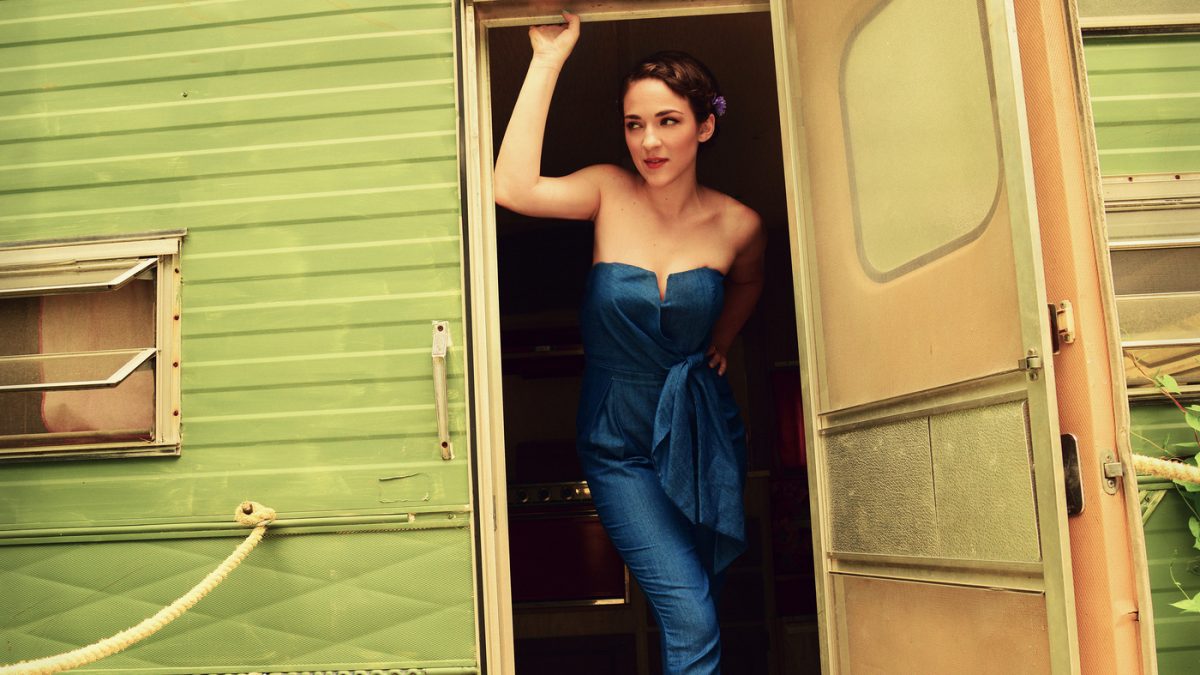
Singer/songwriter/multi-instrumentalist Becca Stevens continues her “WONDERBLOOM” campaign with a new full-length album, once again titled “WONDERBLOOM”, which was released March 20th 2020. The first track from the album is ‘Good Stuff’, 

Becca Stevens again defies all expectation, this time dreaming up a groove-heavy, dance-ready sound infused with elements of pop and funk and R&B. With its bright textures and uptempo rhythms, “WONDERBLOOM” also finds Becca achieving a profound complexity in her lyrics, ultimately redefining what’s possible in creating music that elevates and deities.

What are some of your earliest memories of music?

Rehearsing in the family band, the Tune Mammals! Getting in the stinky minivan and driving around to festivals and schools in North Carolina to perform silly/witty children’s songs with my family. Singing and performing in musicals on stage as a kid. Recording little clips of myself singing on a Fisher-Price tape recorder. Making up dances to MC Hammer and Paula Abdul. Making up rambling songs about literally everything. 

Take us through your songwriting process. Are there any particular steps you take when putting music together?

  1. I’m either inspired, or I have an assignment which leads me to seek the inspiration I need to pull me in.  
  2. I pick up an instrument and start noodling, or open GarageBand/Logic and record a drum loop or a bass line or a texture, or start journaling, or start singing a melody wordlessly or with words, or start walking in a circle and thinking, or lay on the bed and ask myself questions, etc… 
  3. I follow whatever part of the process is most inviting and serving the song to the best of my ability. 
  4. I try to avoid shutting down the process by listening to my inner critic too much early on. Keep moving. Follow what’s working. Don’t think too much. 
  5. I keep my eyes and mind open for sparks, or cues from the muse. (Once the inspiration is ignited, and the muse is involved it’s much easier to get along with my inner critic). 
  6. When I find the spark or moments that are working musically/lyrically/narratively, I write it down/record it/capture it in some way.
  7. When I lose the plot, I ask myself questions like: How can I best serve this song? Who’s speaking in this song? Where are they? What are they doing? What story are they trying to tell? Does the music tell the same story as the text? etc. I come back to these questions over and over and over again to reset, clarify, and refocus. 
  8. Stay committed till I find the feeling that it’s done. Like baking a cake, you can often smell when it’s done before you open the over to look. And I comfort myself with the knowledge that I can always change it again tomorrow. 

Studio work and music creation or performing and interacting with a live audience, which do you prefer?

A balance of all three! Triangle! Triptych! Trinity!

What is the most memorable response you have had to your music?

My favourite responses though are when kids like my music. Kids singing or dancing along to my music is the highest form of flattery. When people tell me that my music has helped them through really hard times. I keep those words in a special compartment in my heart that I try to remember to draw from/remind myself of when I’m down about my career or artistry. Memorable responses have also been times when my music has disturbed someone so much that they felt the need to storm out in the middle of a song, write me a letter about how much they don’t like it or write a scathing review. Learning to lean into those responses as well and see a bit of humour in what’s happening there.

If you could put together a radio show, what kind of music would you play?

ALL kinds of good music. Music that inspires me. Traditional music. Music with beautiful stories. Music that defies categorization. Music from all over the world. I think I would choose a theme or feeling for each episode and make a playlist that plays into the theme or feeling… oooh I’m ready to start this radio show.

Name five artists and their albums who would appear on your radio show

1.Juana Molina 2.Bassekou Kouyate Ngoni Ba 3. Wye Oak 4. Bothy Band 5. Snoop Dogg

What would you like to achieve with your music? What does success look like to you?

“Success is not the key to happiness. Happiness is the key to success. If you love what you do, then you will be successful.” (Been digging around for who said this. I’ve narrowed it down to either Albert Schweitzer or the Buddha.) I would take this one step further and say if you love what you are doing, then you ARE successful. But like anyone I have dreams I associate with success in my field, like touring with my band in a tour bus, playing Madison Square Garden, winning a GRAMMY, or making enough money on the road that the schedule is less than brutal.

One last thought to leave your fans with?

Make the music/art/live the life that inspires you. If you create something hoping to impress others, and they aren’t impressed, then you’ve wasted your time completely. If you make something you aren’t terribly excited about and it does impress others, then you are known for something you don’t believe in. As long as you are creating things/making choices you believe in, then it is time well spent.

Follow Becca Stevens online 

YouTube | Facebook | Instagram | Twitter

April 3, 2020 Interview with singer/songwriter MACKandgold

Interview with singer/songwriter MACKandgold

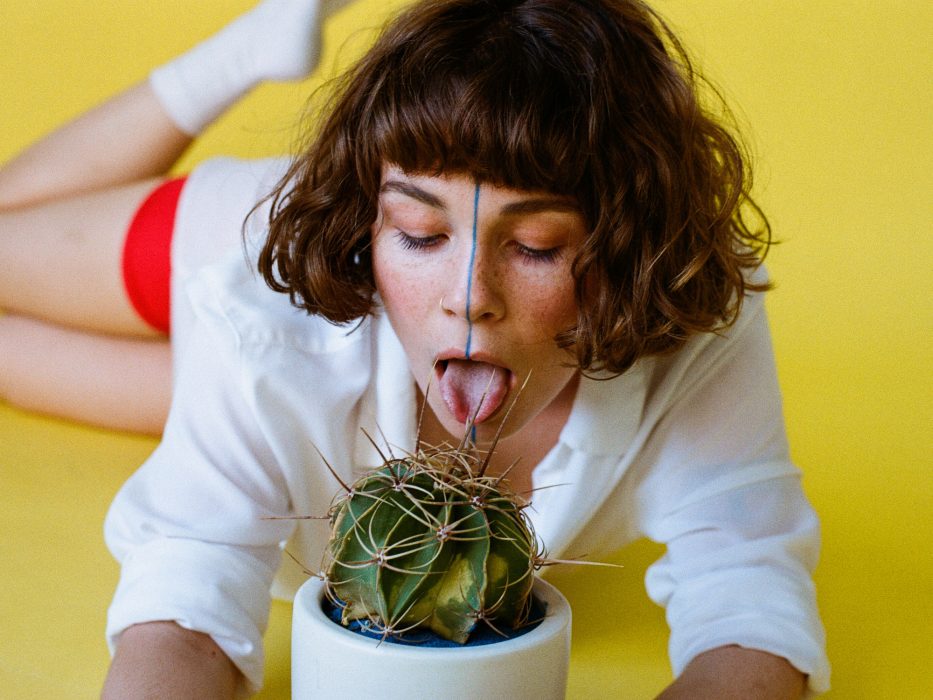
Singer MACKandgold has proven the dedication she has to her career as she navigates every curveball life throws her way, turning those ups and downs into stories and songs we can all relate to. 

MACKandgold has always been careful with her music. She finds ways to explore her sound with different producers at her side all while keeping the vibes consistent. As her work continues to trickle out into the world, she walks us along an honest path of self-discovery and experimentation.

What are some of your earliest memories of music?

My mom singing me lullabies. My wind upbears that would play slower and slower and slower till I fell asleep. The Wizard of Oz.

Take us through your songwriting process. Are there any particular steps you take when putting music together?

The steps that seem to work over and over is finding the emotion first. Then the subject follows.  What’s the story. From there its just beautiful chaos and hopefully freedom to explore. I don’t do so well in sessions with time limits.

Studio work and music creation or performing and interacting with a live audience, which do you prefer?

The studio work is fun and special in its own way, like creating a recipe. But performing and interacting with an audience is the whole cake.

What is the most memorable response you have had to your music?

Someone told me that watching me made them feel freer to be themselves, and love themselves…like I inspired that in them. That’s the coolest. I want to do that. And often Iv’e heard “you’re my spirit animal”, an animal I’m proud to be.

If you could put together a radio show, what kind of music would you play?

Everything that’s ever made an impact on me. The songs and artists that I feel like are part of my soul and can cover all my moods.

Name five artists and their albums who would appear on your radio show

Chet Baker – Chet Baker sings, David Bowie – The rise and fall of ziggy stardust and the spiders from mars, daft punk – Discovery, Pink Floyd – Dark Side of the moon (+ have a cigar cuz it’s my favourite), LCD Soundsystem – this is happening (+someone great)

What would you like to achieve with your music? What does success look like to you?

Connecting people. Success looks like being able to do this as much as possible. I know it can change the world. That woman who I can inspire to self-love, she’s gonna spread that around. It’s really infectious.

One last thought to leave your fans with?

Wash your hands

Follow MACKandgold online 

Facebook | Instagram | Twitter

March 25, 2020 Q&A with music producer Christian Garcia-Gaucher

Q&A with music producer Christian Garcia-Gaucher

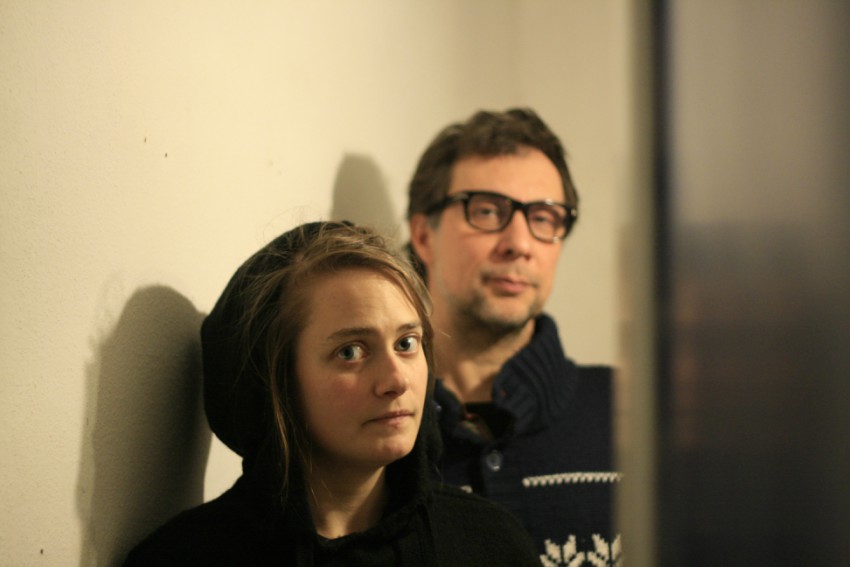
Musician and composer Christian Garcia-Gaucher has a music teaching degree and wrote a thesis around improvisation in the world of classical music and music education.

Christian Garcia-Gaucher also composed for various dance, theatre and performance productions by Elodie Pong and Robert Pacitti, Denis Maillefer and Fabienne Berger. He also writes music for films, in Switzerland for, among others, Jean-Stéphane Bron, as well as for Vincent Pluss, in Germany for Sonja Heiss, and in England for Andrew Kötting.

What are some of your earliest memories of music?

My 5 years older brother and family playing music at home.

Take us through your songwriting process. Are there any particular steps you take when putting music together?

First music, then lyrics, then I very often change the music again.

Studio work and music creation or performing and interacting with a live audience, which do you prefer?

Both are part of this activity, but personally I spend more time on creation and studio.. unfortunately maybe.

What is the most memorable response you have had to your music?

A sound technician in Paris, taking off our drum set while playing the end of the concert and saying: shitty band, shitty music…

If you could put together a radio show, what kind of music would you play?

Eclectic, lo-fi, alternative, repetitive, contemporary music, for sure something free and cool … but Radio Campus in Brussels is totally great in this sense.

Name five artists and their albums who would appear on your radio show

– Brainticket, Cottonwoodhill

– Programme, l’enfer tiède

– Charlemagne Palestine, Jamaica Heinekens in Brooklyn

– King Kong, Trouble again

– Circle, Miljard

What would you like to achieve with your music? What does success look like to you?

Just stay free and be able to continue to make research on sounds, structures, styles, etc.. If success means having the possibility to continue what’s described higher, that’s ok. If it means to start to be locked up by a system, that sucks.

One last thought to leave your fans with?

From Heidegger: To the extent that each thing has its place, its moment and its duration, there are never two similar things.

Follow Christian Garcia-Gaucher online 

Spotify 

Q&A with singer/songwriter Emilie Zoé

Lausanne-based singer/songwriter has always done things by herself. She writes, records, and manages her work only following her precise feeling of what’s correct and what’s not.

In 2019, Emilie Zoé got a Swiss Music Award and was invited to play major festivals such as The Great Escape Brighton (UK), Fusion Festival (DE), Bad Bonn Kilbi (CH), Paléo Festival Nyon (CH), Winterthur Musikfestwochen (CH), and opened for Shannon Wright (Le Trianon, Paris) or Jay-Jay Johanson (La Gaité Lyrique, Paris). In 2020, Emilie Zoé played Eurosonic Noorderslaag.

See our exclusive interview with her below:

What are some of your earliest memories of music?

Listening to the same Tom Wait’s record over and over at my parent’s and imagining the music was really played live every time I pressed “play”. I remember imagining the musicians were in a small shack in the forest using weird objects to make those sounds. I couldn’t distinguish any instrument though at that time and didn’t think about the way this music could come to my ears.

Take us through your songwriting process. Are there any particular steps you take when putting music together?

I have to play on an instrument, and the instrument helps to find notes that sound good on it and good to my ears. Then come melodies and words with them, and it makes a verse or a chorus. Then I dig into the sense of it and find the story I want to tell with that song by writing other parts of the song, little by little, like an archaeologist digging up an old object.

Studio work and music creation or performing and interacting with a live audience, which do you prefer?

For me at the moment playing live is the most important, and what I’ve done most. The skeleton of a song is written at home but then I try it on stage and it evolves by being played live. And in the studio, I’ve always recorded songs playing “live” guitar and vocals. Both are highly connected.

What is the most memorable response you have had to your music?

Last year’s whole tour, playing an album called “The Very Start” (Hummus Records, 2018). We played 120 shows in Europe and it was crazy how people always came to talk to us enthusiastically after every show.

If you could put together a radio show, what kind of music would you play?

Rough and simple music that touches me directly. Sometimes lo-fi home recordings.

Name five artists and their albums who would appear on your radio show

The White Stripes – Elephant

Two Gallants – The Bloom and the Blight

Louis Jucker – Eight Orphan Songs

Great Black Waters – Songs for a Bath

Lhasa – The Living Road

What would you like to achieve with your music? What does success look like to you?

I’d like to be able to continue writing, playing and recording music as long as possible. For me it’s a kind of social activity: I make music with my friends, we release our records on a self-managed label and it would be great if it could inspire and motivate people to do their own activities together with the people they like. We will need to create resilient structures and strong social ties for the years to come.

One last thought to leave your fans with?

Let’s try to learn as much as possible, be enthusiastic and curious about the world and the universe. With this knowledge, we’ll be able to decide how to live in the best possible way.

Follow Emilie Zoé online 

Facebook | Instagram | YouTube | Twitter